Employment Rights
Healthcare
Politics
Public Services
Sean McEochaidh
8 months ago
0 Comments
93 Views
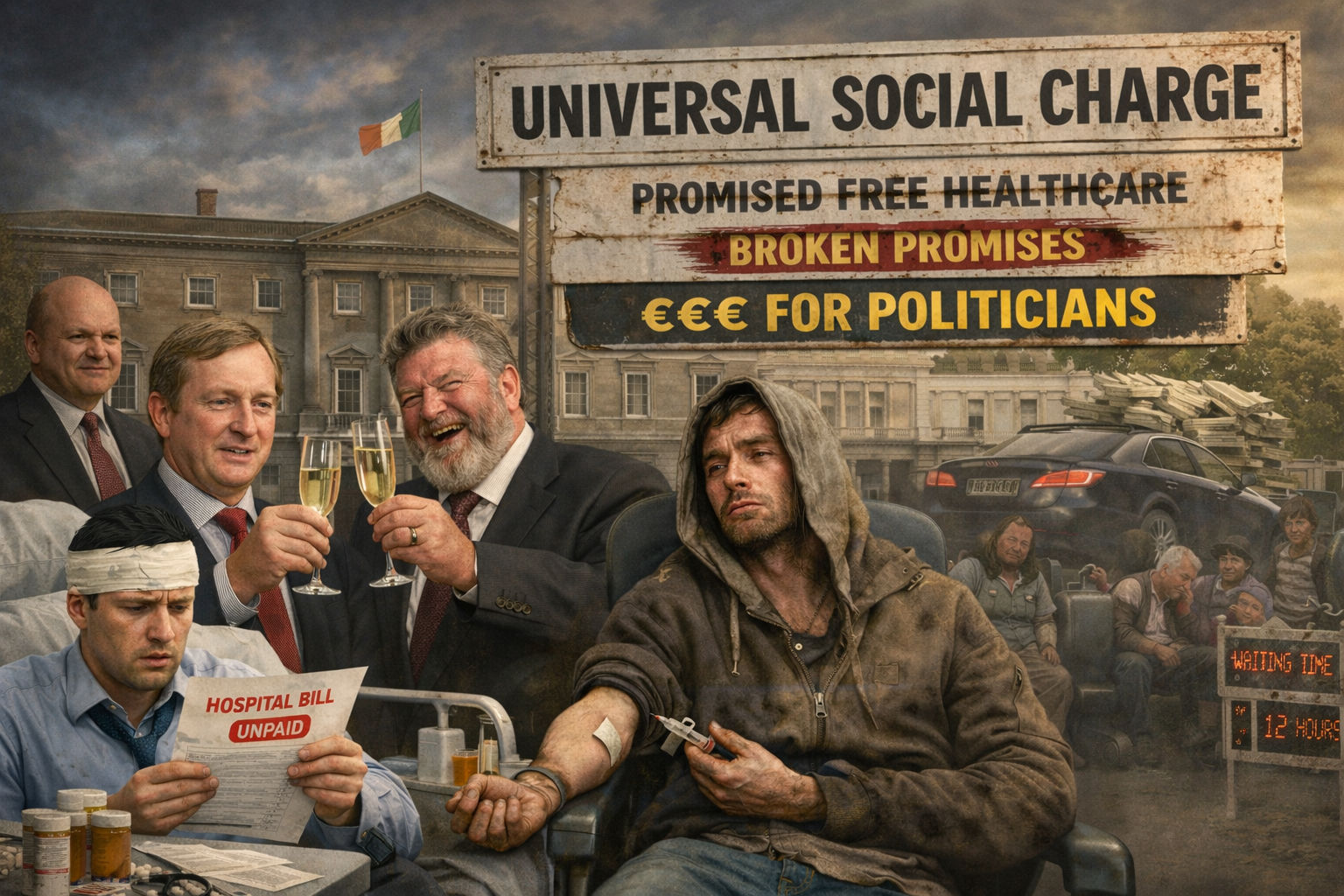
Universal Social Charge, The Tax That Lied and Never Left, Blatant theft of our wages!
How a Crisis Levy Became a Permanent Burden on Work, and why aren’t we outraged?
Universal Social Charge, is The Emergency Tax That Became Permanent Without Consent, The Universal Social Charge Was Introduced in Crisis but Normalised in Prosperity
The Universal Social Charge arrived in 2011 during Ireland’s fiscal collapse, introduced by the Fine Gael and Labour coalition as part of the EU-IMF bailout architecture. The state framed it as a necessary consolidation of the Income Levy and the Health Levy, both of which had been presented as temporary responses to crisis. USC was positioned as cleaner, fairer, and unavoidable. The language focused on national recovery and shared sacrifice, but the structure told a different story from day one.
USC broadened the tax base aggressively. It pulled low and middle earners into a permanent income charge that applied regardless of credits, family status, or real cost of living. Unlike PRSI, it created no entitlement. Unlike income tax, it carried no meaningful relief mechanisms. It delivered exactly what the state needed most at the time, predictable revenue extracted automatically from wages. What it never delivered was a defined return for the people paying it. Essentially it was and still is theft of your earnings bu high earning politicians.
Specific Ministers Explicitly Linked USC and Health Reform in Public Messaging
The confusion around USC and healthcare did not happen by accident. It emerged from repeated political statements that blurred replacement levies with service delivery. In 2011 and 2012, then Minister for Health James Reilly publicly committed to universal primary care and the gradual removal of fees, including GP visit costs. He repeatedly described free GP care as a central plank of reform and framed funding as a matter of political will rather than structural limitation.
During the same period, Michael Noonan, then Minister for Finance, defended USC as a stabilising measure that allowed the state to continue funding essential services, including health. While he avoided direct promises of free healthcare, the political ecosystem allowed the implication to stand unchallenged. The Health Levy disappeared. USC replaced it. Voters reasonably inferred continuity of purpose, even though the legislation never guaranteed it. Because we were lied to, plain and simple.
Labour ministers compounded this perception by campaigning on protection of public services and social equity, while voting through a tax structure that delivered neither targeted reform nor enforceable outcomes. The result was a promise environment without a statutory anchor.
USC Was Never Ring Fenced and Ministers Knew That From the Start
Despite political rhetoric, USC entered law as general revenue. The Department of Finance made this clear internally and repeatedly confirmed it in Oireachtas answers. No section of the USC legislation tied receipts to healthcare, GP access, hospital capacity, or waiting list reduction. Once collected, USC vanished into the central Exchequer and became indistinguishable from income tax receipts.
That distinction matters because universal healthcare requires structural funding commitments, not discretionary allocation. Countries with genuine universal systems fund them through explicit mechanisms, whether national insurance or dedicated health taxation. Ireland chose neither. Ministers continued speaking about reform while maintaining a funding model that made reform optional rather than mandatory. But in Ireland we’re used to being lied to and stolen from without the backbone to demand answers.
Free GP Care Was Promised, Partially Delivered, Then Quietly Abandoned
James Reilly’s flagship promise of free GP care for all never materialised. The state introduced limited free GP access for children under six and adults over seventy, later expanded slightly to children under eight. These measures were selective, means tested, and politically convenient. They did not constitute universal care. Working adults remained excluded unless they qualified for medical cards. Most don’t by the way!
Crucially, USC remained untouched throughout this period. Workers continued paying an income levy that had replaced a health charge, while paying privately for GP visits or insurance. The promise narrowed. The tax stayed wide. No minister ever returned to the electorate to reconcile that contradiction honestly.
USC Became Permanent Because It Protected Political Spending Power
By the mid-2010s, Ireland exited the bailout and returned to growth. Emergency justifications evaporated. USC did not. The reason was straightforward. The tax delivered billions annually with minimal administrative friction. It insulated ministers from hard spending choices by expanding the revenue pool without reforming service delivery.
Politicians benefited institutionally. Budgets grew. Departmental discretion increased. Capital projects, public sector pay deals, advisory bodies, quangos, and political initiatives all drew from a larger pool of general revenue. USC did not improve accountability. It diluted it. No minister had to defend specific outcomes tied to the tax because none existed.
The Burden Fell on Workers While Political Classes Faced No Trade Offs
USC hits earned income. It does not meaningfully affect wealth, capital structuring, or political remuneration. TD salaries, allowances, and pensions absorbed USC as a marginal inconvenience rather than a structural burden. For PAYE workers, especially those just above exemption thresholds, USC compounded cost of living pressure without delivering visible benefit.
At the same time, political actors retained control over allocation without direct accountability to contributors. The people paying USC could not trace it to healthcare access, housing delivery, or service improvement. That asymmetry matters. It explains why resentment hardened and trust collapsed.
Healthcare Outcomes Did Not Improve in Proportion to USC Revenue Growth
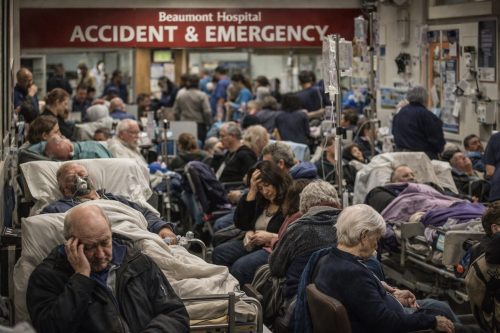
USC revenue grew steadily over the years, surpassing five billion euro annually. During the same period, hospital waiting lists expanded, GP access remained fragmented, and private insurance penetration increased. The state spent more, but outcomes did not scale with extraction.
This failure reflects structural reality. Funding without reform entrenches inefficiency. USC propped up an unreformed system while politicians pointed to spending figures as proof of commitment. Patients experienced delays. Workers paid twice. Ministers cited budgets.
Addiction and Crisis Services Received Priority While Stability Was Penalised
Ireland’s healthcare system prioritises crisis response. Addiction services, emergency interventions, and acute care receive faster access and broader coverage than preventative or routine care for working adults. This reflects political incentives rather than moral clarity.
USC funds that system indirectly. It does not discriminate based on contribution. Those who work, comply, and pay fund emergency responses while struggling to access timely care themselves. This inversion breeds cynicism because it punishes stability and rewards collapse.
Sláintecare Became a Shield for Inaction Rather Than a Vehicle for Change
Sláintecare promised universal access based on need. USC revenue made that promise theoretically affordable. In practice, ministers used Sláintecare as a rhetorical shield to hide behind while maintaining discretionary funding models. Implementation stalled. Timelines slipped. Accountability blurred.
USC did not drive reform. It softened the political cost of delay. That is its true legacy.
The Core Truth Irish Politics Avoids
USC was never a path to universal healthcare. It was an extraction mechanism that outlived its emergency justification. Ministers allowed the public to believe otherwise because ambiguity served them. Workers paid. Politicians benefited from flexibility, discretion, and distance from consequence.
If Ireland wants trust restored, it must confront this directly. Either taxes fund defined outcomes, or politicians stop pretending they do. USC sits at the heart of that dishonesty. Truth be known, our tax does nothing more than fund the members of the government, keeping them rich while the rest of the population have to decide between heat and food.
So where is the outrage? Christy Moore said it right, Ireland has become a nation of obedient shit takers.
Related Posts